Decoding MediaStorm: From Technology Influencer to Creator-Led Digital Business

1. Introduction
MediaStorm, founded by Chinese creator Tim Pan, is a well-known technology and filmmaking creator brand. Its content covers filmmaking equipment, production tutorials, technology reviews and behind-the-scenes stories.
In August 2026, its Bilibili account had about 17.1 million followers and its YouTube channel had about 0.9 million subscribers and nearly 89.7 million total views. These figures show that MediaStorm has built a large online audience, although Bilibili is still its strongest platform.
It is no longer just a product review channel. It has developed into a creator-led digital enterprise, combining content production, education, brand cooperation and e-commerce. This research and blog post will explores its customer segmentation, content and participation strategies, digital channels and revenue models.
Then, it assesses three major challenges: platform dependence, decentralised digital assets, and the balance between commercialisation and audience trust.


2. Analyse and Reflect
2.1 Customer Segments, Content and Engagement
MediaStorm attracts filmmakers, independent creators, students, technology fans and digital-lifestyle consumers. Its commercial audience is especially young and male.
Third-party data reported in 2025 showed that about 83% of the audience for its Douyin flagship store was male and around 50% was aged 18–23.
This helps explain why the brand has expanded from cameras and production equipment into clothing, accessories and digital courses.
Its content mixes useful information with entertainment and strong visual production.
Instead of only explaining technical specifications, MediaStorm often turns technology into stories, experiments and large projects.
Research suggests that both functional and entertainment value in influencer content can increase purchase intention (Shaheen et al., 2025).
MediaStorm also uses milestone Q&A videos to engage followers. Its 2026 “16 Million Followers Q&A” had more than 6 million views by August 2026. (Reinikainen et al., 2020) found that parasocial relationships can strengthen influencer credibility and affect brand trust and purchase intention.
2.2 Channels and Digital Ecosystem
Bilibili is MediaStorm’s main channel for domestic reach and community building.
YouTube gives the brand international exposure, but its audience is much smaller. This gap shows that MediaStorm has gained overseas visibility but has not reached the same scale outside China.
MediaStorm also runs ysjf.com, which links users to education, production tools, materials and business information.
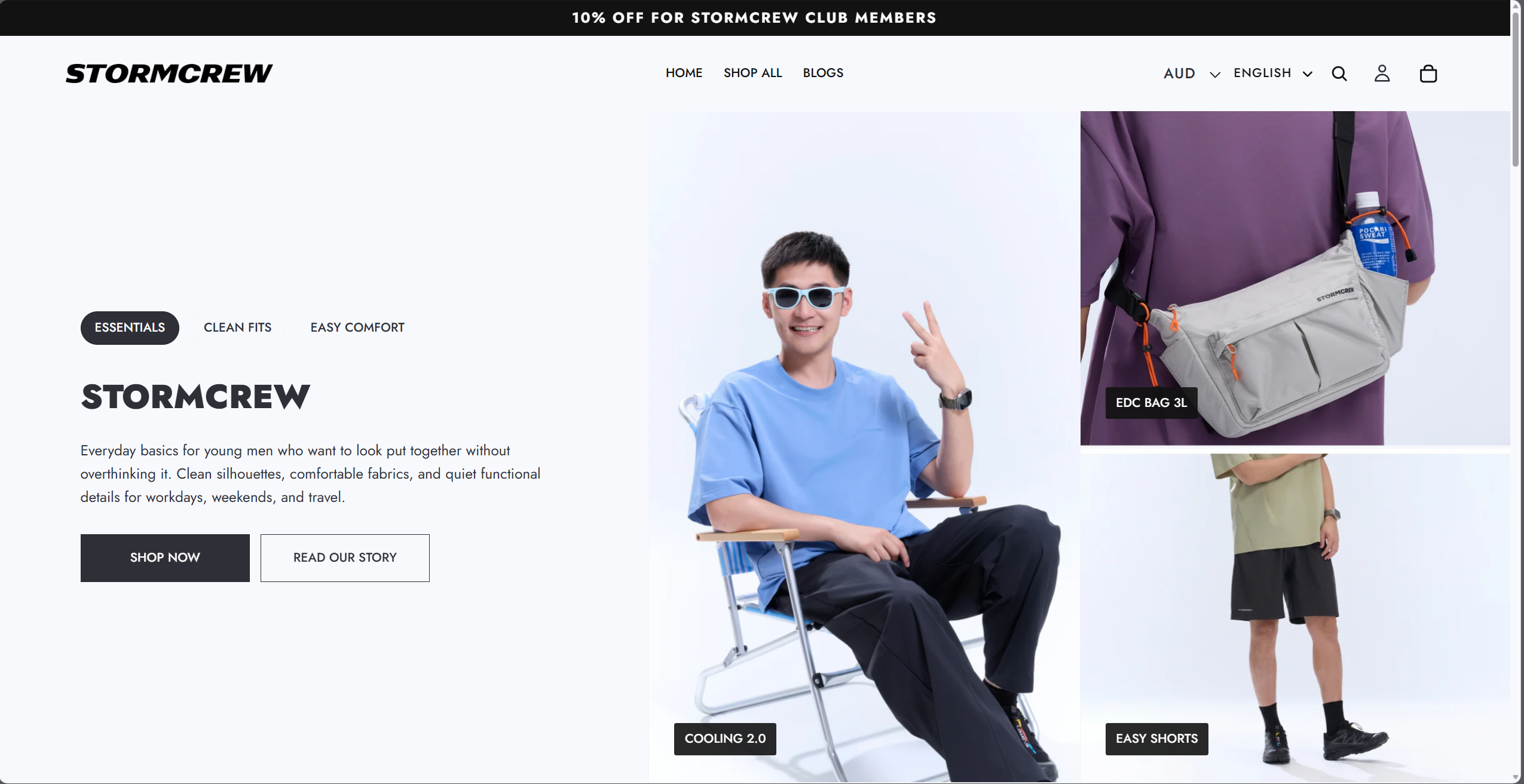
Its overseas StormCrew store offers 13 language options, customer accounts, email sign-up, shipping and support. These websites show that MediaStorm is building digital assets outside social media. However, owning websites alone does not remove platform dependence if most people still discover the brand through social platforms.

2.3 Revenue Streams and Partnerships
MediaStorm’s revenue model has changed a lot. In 2019, reported revenue came from TVC production (50%), channel partnerships (25%) and e-commerce (25%).
More recently, Tim said e-commerce had become the company’s largest business, while TVC had fallen to about 10% of revenue. Media reports also said that 2024 turnover exceeded RMB 100 million and that one T-shirt sold more than 200,000 units.
This shows a clear shift from selling production services to monetising its own brand and audience.
Brand partnerships are also turned into content. MediaStorm’s satellite project with Insta360 reportedly cost more than RMB 3 million.
Instead of making a normal advertisement, the team turned the partnership into a large content project. This is a key strength because the commercial message is built into content that audiences may still find interesting.

2.4 Problem and Reflect
The first challenge is platform dependence. MediaStorm still relies on Bilibili, Douyin, Xiaohongshu and YouTube for discovery and distribution. (Cotter, 2019) explains that influencer visibility is partly shaped by platform algorithms, so creators do not fully control how their content reaches audiences.
MediaStorm therefore gains scale from these platforms but is also exposed to algorithm and policy changes.
The second challenge is fragmentation between its digital assets. Social platforms, ysjf.com and StormCrew serve different purposes, but their relationship is not always clear.
This is especially important for overseas users who may see StormCrew without knowing its connection with MediaStorm. Since credibility and parasocial interaction can increase purchase intention (Sokolova & Kefi, 2020), weak brand links may reduce the value of MediaStorm’s existing audience trust.
The third challenge is commercialisation and authenticity. As e-commerce, paid courses and brand partnerships become more important, audiences may find it harder to separate independent content from commercial content.
MediaStorm therefore needs to grow its business without weakening its professional image and audience trust.
3. Recommendations
First, MediaStorm should strengthen its owned-media strategy. It could publish search engine optimisation (SEO) content on filmmaking techniques, equipment comparisons and buying guides, while also building an email subscriber list.
This would give the brand more direct ways to reach users outside social-media algorithms.
Second, MediaStorm should connect ysjf.com and StormCrew more clearly. The main website could provide a stronger e-commerce link, while StormCrew could explain its relationship with MediaStorm and Tim. This would create a clearer:
content → trust → product → purchase
journey for overseas customers.
Third, MediaStorm should use clearer commercial disclosure. Sponsored videos, independent reviews, educational products and direct promotions should be clearly identified. (Evans et al., 2017) found that clearer influencer advertising disclosure can improve audiences’ recognition of commercial content.
This could help MediaStorm stay transparent while continuing to grow its commercial activities.
4. Conclusion
MediaStorm shows how a technology influencer can develop into a creator-led digital business. Its large audience, different revenue sources, brand partnerships and growing e-commerce business show that it has successfully turned online influence into commercial value.
Future growth will depend on reducing platform dependence, linking its digital assets more effectively and protecting audience trust.
Overall, MediaStorm’s main advantage is not only attracting attention, but turning:
attention into trust, trust into brand value, and brand value into long-term customer relationships.
References
Cotter, K. (2019). Playing the visibility game: How digital influencers and algorithms negotiate influence on Instagram. New Media & Society, 21(4), 895–913. https://doi.org/10.1177/1461444818815684
Evans, N. J., Phua, J., Lim, J., & Jun, H. (2017). Disclosing Instagram Influencer Advertising: The Effects of Disclosure Language on Advertising Recognition, Attitudes, and Behavioral Intent. Journal of Interactive Advertising, 17(2), 138–149. https://doi.org/10.1080/15252019.2017.1366885
Reinikainen, H., Munnukka, J., Maity, D., & Luoma-aho, V. (2020). ‘You really are a great big sister’ – parasocial relationships, credibility, and the moderating role of audience comments in influencer marketing. Journal of Marketing Management, 36(3–4), 279–298. https://doi.org/10.1080/0267257X.2019.1708781
Shaheen, A., Khataan, A., Awad, A., Yahia Shams Eldin, A., & Elnour, A. (2025). The role of influencer content value and credibility in purchase intention. Innovative Marketing, 21(3), 14–30. https://doi.org/10.21511/im.21(3).2025.02
Sokolova, K., & Kefi, H. (2020). Instagram and YouTube bloggers promote it, why should I buy? How credibility and parasocial interaction influence purchase intentions. Journal of Retailing and Consumer Services, 53, 101742. https://doi.org/10.1016/j.jretconser.2019.01.011
