Temu and AI-Driven Digital Marketing: Effective Personalisation or Too Much Persuasion?
Can AI make online shopping easier without making consumers feel watched or manipulated?
Temu provides an interesting example of both the opportunities and risks of AI-driven digital marketing.
1. Introduction
Temu is a global e-retailer that sells a variety of low-priced products through its website and mobile App. By 2026, its average monthly active users in the European Union will be about 75 million. Artificial Intelligence (AI) is now an important part of Temu's digital marketing, especially in product recommendation, personalised advertising and product discovery. Research comparing major e-commerce platforms also shows that Temu uses many customer-oriented AI tools (Papastamoulou & Antonopoulos, 2025).
This blog discusses how Temu can effectively use AI in digital marketing. AI can make product discovery easier and promotional activities more relevant to customers. However, the same technology has also raised concerns about privacy, manipulation, transparency and product safety.
2. AI Integration in Temu’s Digital Marketing
One of Temu's main AI applications is personalised product recommendation. Temu's Australian privacy policy states that it collects information such as browsing, search and purchase history, shopping cart activity, account information and device data. This information can be used to recommend products, personalise search results and display personalised advertising products (Temu, 2026).
Personalisation is very useful for Temu, because the platform sells many different categories of products. The recommendation system can reduce the time for customers to search and help them find products that better meet their interests. Temu also uses customer information to personalise promotional and marketing information. This means that AI can support different parts of the customer's journey, from finding products, to seeing advertisements, to returning to the platform.
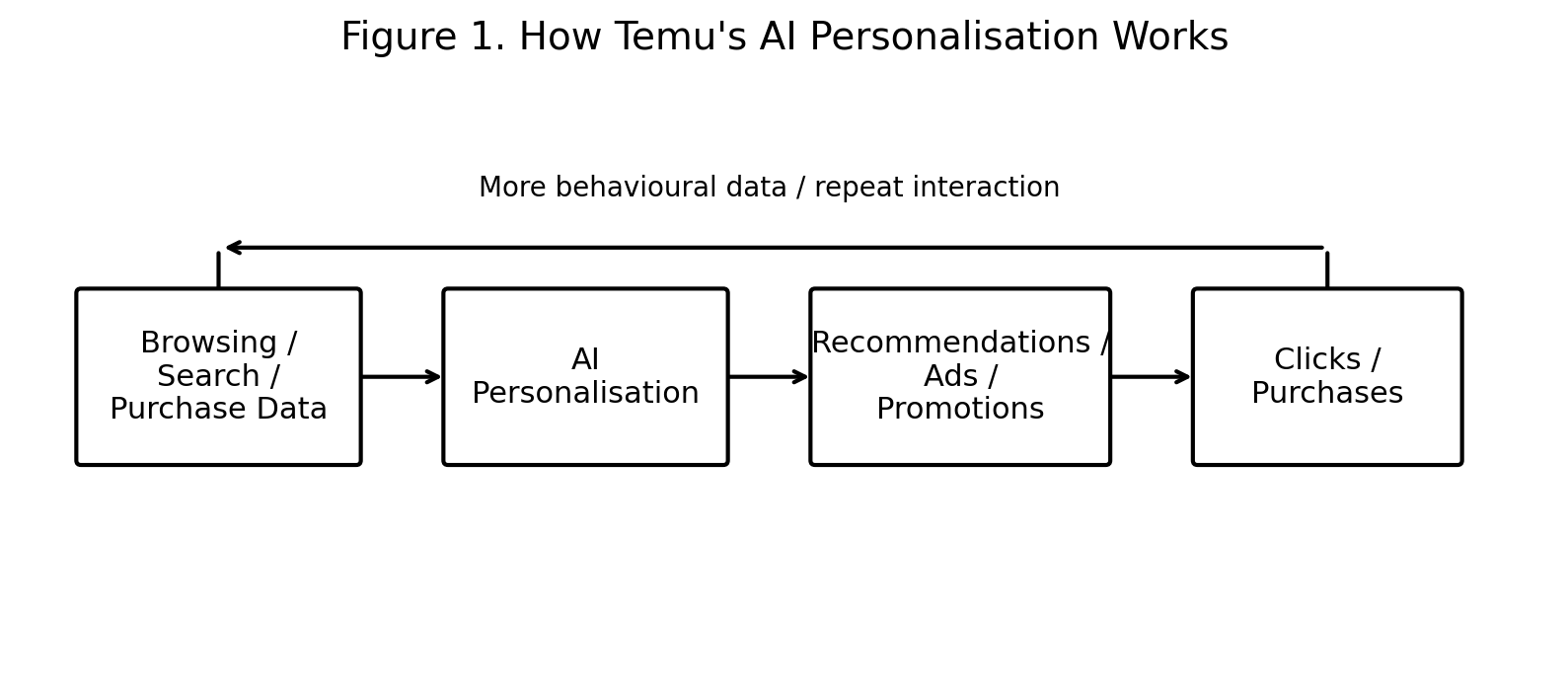
Figure 1. Customer behaviour data feeds into AI personalisation, which influences recommendations, advertisements and promotions.
However, Temu did not publicly explain how its recommendation algorithm works, nor did it explain how much sales growth can be brought about by AI alone. This makes it difficult to measure the exact effect of AI. Temu also relies on low prices, discounts and gamified promotions, so its overall growth cannot be simply explained by AI.
3. Effectiveness of AI Marketing
There is evidence that personalised recommendations create value for Temu users. Zhang et al. (2026) studied 676 Korean Generation Z consumers who have used Temu. They found that recommendation quality was positively correlated with the perceived value (β = 0.157, p < 0.001). Price advantage and platform usability are also positively related to value. This shows that Temu's customer value comes not only from low prices. Relevant suggestions and easy-to-use platforms are also important.
Other e-commerce studies also show that personalisation will affect customer relationships. Hassan et al. (2025) found that adding personalised recommendations can improve the explanatory power of the model by about 5%, although the impact on trust and satisfaction is mixed. This shows that personalisation can add value, but it cannot automatically improve every part of the customer relationship.
Temu's research also found a negative side. Better recommendation quality is positively correlated with manipulation concern (β = 0.135) and privacy concern (β = 1.132) (Zhang et al., 2026). Customers may like to see the relevant products, but they are still worried about how much the platform knows about them and how much it tries to influence their choices.
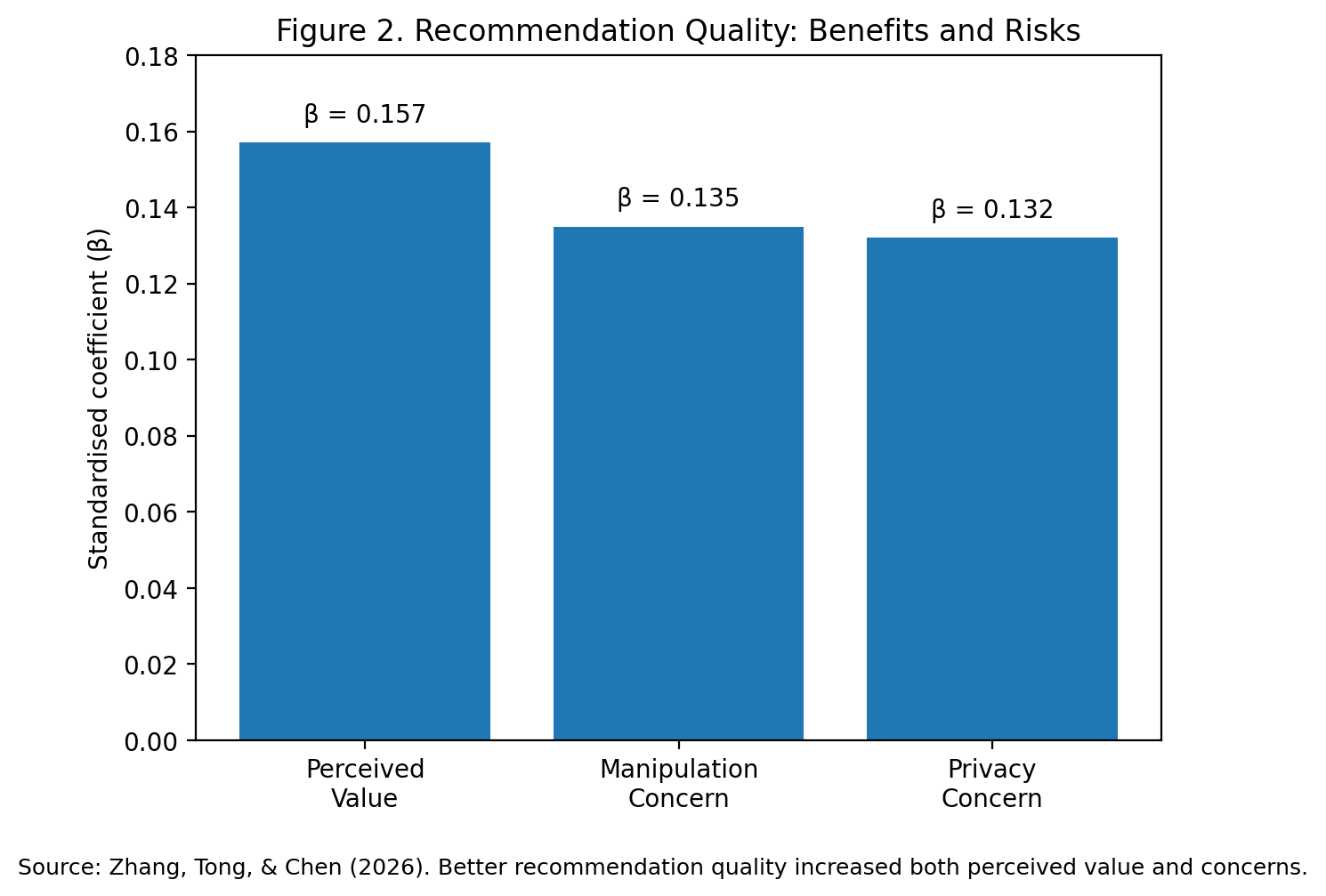
Figure 2. Better recommendation quality may increase perceived value, while also increasing manipulation and privacy concerns.
Source: Zhang et al. (2026).
A retail field experiment by Zobair et al. (2026) found a similar problem. Personalised AI information increases purchasing behaviour, but also increases the sense of intrusion. This shows that Temu should not measure the effectiveness of AI only by clicking and selling. AI can improve business results, but it will also make some customers feel uncomfortable.
Key point: More effective personalisation does not always mean a better customer experience.
4. Competition: Temu versus SHEIN
SHEIN is a useful competitor because both companies are international e-retailers and rely heavily on mobile shopping, recommendations and personalisation. Papastamoulou and Antonopoulos (2025) compared the use of AI in Amazon, Apple, SHEIN, Temu and IKEA. According to the AI functions included in the study, the functional coverage rate of Temu is about 66%, while SHEIN is 33% and Amazon is 83%.
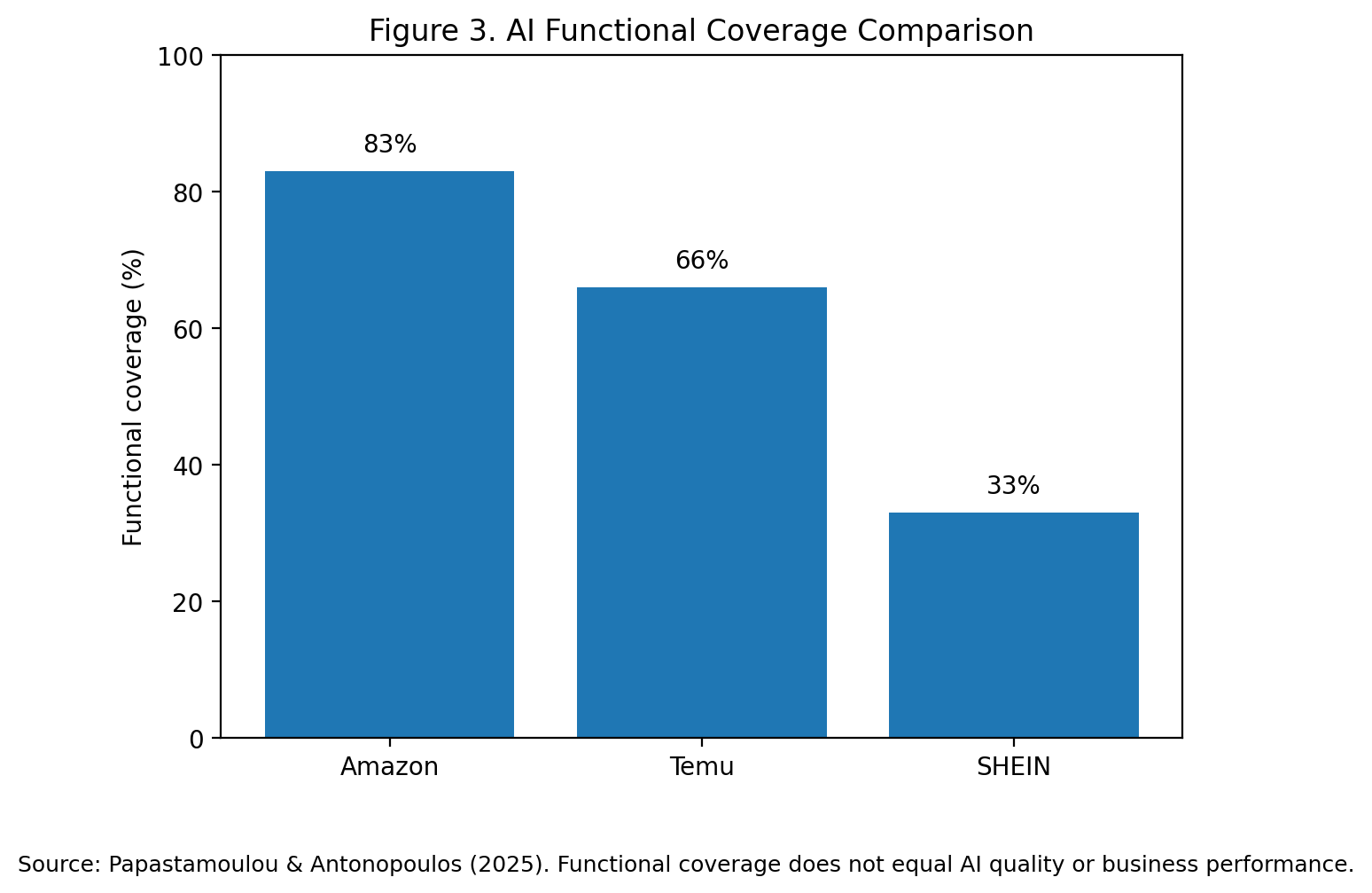
Figure 3. AI functional coverage across Amazon, Temu and SHEIN.
Source: Papastamoulou and Antonopoulos (2025).
Note: Functional coverage does not mean AI quality or business performance.
The study identified Temu tools, such as product recommendation, visual search and intelligent product classification. However, these percentages only show the range of AI functions found in the study. They didn't show which company has better algorithms or makes more money from AI. Therefore, in this study, Temu seems to use AI more widely than SHEIN, but its AI ecosystem is still smaller than that of Amazon.
Overall, Temu is competitive, but obviously not the market leader. Its main advantage is the direct use of AI in the shopping experience, while large platforms such as Amazon use AI in more business areas.
5. Ethical Considerations
Privacy and Transparency
The first ethical issue is privacy and transparency. Temu uses browsing, search, purchasing, account and device information to personalise recommendations and advertisements (Temu, 2026). This can make shopping more relevant, but users may not always know how much personal data is used.
Karwatzki et al. (2017) explained that consumers have achieved a balance between the benefits of personalisation and their emphasis on privacy.
The key trade-off:
More personalisation = more relevant content, but also more personal data being used.
Manipulative and Addictive Design
The second problem is the manipulative and addictive design. Liu and Gomez Cruz (2026) studied Temu users and described the concept of "platform cynicism". Some users may recognise the manipulation or immoral behaviour of the platform, but continue to use Temu because it is cheap or convenient.
This means that high participation does not always mean high trust or satisfaction.
These concerns have also attracted the attention of the regulatory authorities. In 2024, the European Commission launched formal procedures for Temu, including concerns about addiction design, game-based reward programs and referral systems.
In May 2026, the European Commission fined Temu €200 million for failing to correctly assess the risks associated with illegal products. It also found that Temu did not properly assess how recommender systems and influencer promotion programmes could increase the spread of illegal products in the recommendation system and influencer promotion (European Commission, 2026).
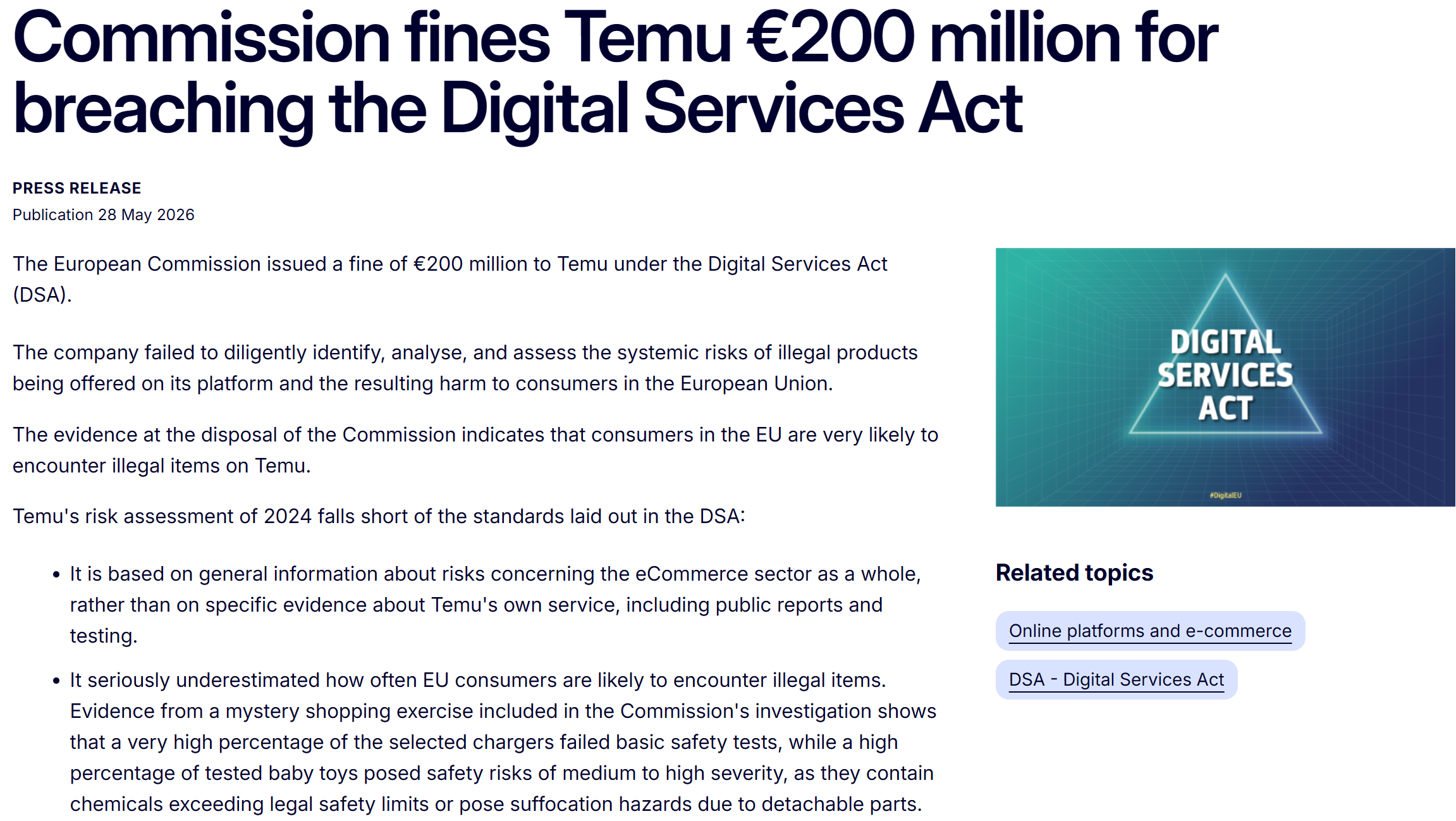
Source: European Commission (2026).
This creates an important digital marketing issue: a recommendation system can help customers discover products, but it can also increase the visibility of risky products.
6. Recommendations
1. Give Users More Control Over Personalisation
First of all, Temu should give users more control over personalisation. Temu has allowed some users to turn off personalised recommendations, but these settings may be easier to understand.
A "Why did I see this?" function and simple options to reset the recommendation history can improve transparency.
Temu can measure results by:
- customer satisfaction;
- privacy complaints; and
- personalised exit rates.
2. Focus on Long-Term Customer Value
Secondly, Temu should use long-term customer value to measure AI, not just clicks and short-term sales.
It should also monitor:
- return rates;
- complaints;
- duplicate purchases; and
- customer satisfaction.
This can reduce the risk of suggestions that create fast sales but then lead to a bad customer experience.
3. Include Product Safety and Seller Quality
Third, Temu should include product safety and seller quality in its recommendation strategy.
Products with high security or compliance risks should receive less attention even if they may attract clicks. This directly responds to the European Commission's concerns and conforms to the growing trend of responsible AI.
The expected result will be to reduce consumer risks and enhance long-term trust.
From More AI to Better AI
Transparency → Give users more control
Customer Value → Focus on long-term outcomes
Responsible AI → Consider product safety and seller quality
7. Conclusion
Temu shows how AI can support digital marketing in large online markets. Personalised recommendations can make product discovery easier and improve perceived value. Temu also seems to compete with digital e-retailers such as SHEIN, although its overall AI integration is not as extensive as Amazon.
However, Temu's greatest AI advantage is also one of its biggest risks.
Better personalisation can support purchases, but it will also increase privacy issues and the feeling of being manipulated. Temu's future challenge is not only to use more AI, but to use it in a more transparent, safer and more focussed way on long-term customer value.
What Do You Think?
Does AI personalisation make online shopping more useful, or does it give platforms too much influence over our choices?
Share your opinion in the comments.
References
European Commission. (2026). Commission fines Temu €200 million for breaching the Digital Services Act. https://digital-strategy.ec.europa.eu/en/news/commission-fines-temu-eu200-million-breaching-digital-services-act
Hassan, N., Abdelraouf, M., & El-Shihy, D. (2025). The moderating role of personalized recommendations in the trust–satisfaction–loyalty relationship: An empirical study of AI-driven e-commerce. Future Business Journal, 11(1), 66. https://doi.org/10.1186/s43093-025-00476-z
Karwatzki, S., Dytynko, O., Trenz, M., & Veit, D. (2017). Beyond the Personalization–Privacy Paradox: Privacy Valuation, Transparency Features, and Service Personalization. Journal of Management Information Systems, 34(2), 369–400. https://doi.org/10.1080/07421222.2017.1334467
Liu, S., & Gómez-Cruz, E. (2026). “Temu is evil, but I still use it”: Platform cynicism in platform capitalism. New Media & Society, 28(9), 4391–4410. https://doi.org/10.1177/14614448251365269
Papastamoulou, P., & Antonopoulos, N. (2025). Artificial Intelligence in E-Commerce: A Comparative Analysis of Best Practices Across Leading Platforms. Systems, 13(9), 746. https://doi.org/10.3390/systems13090746
Temu. (2026). Privacy policy – Australia. https://www.temu.com/au/privacy-and-cookie-policy.html
Zhang, X., Tong, L., & Chen, M. (2026). Perceived Price Advantage, Recommendation Quality, and Digital Risk in Temu Purchase Intention: A SEM–fsQCA Study of Korean Generation Z Consumers. Journal of Theoretical and Applied Electronic Commerce Research, 21(9), 306. https://doi.org/10.3390/jtaer21090306
Zobair, A. S. O., Kodai, Z. M. O., Almansour, M. A., Mohammed, S. D. A., Agag, G., & Alipour, O. (2026). When AI advice backfires: Field experimental evidence on personalization, intrusiveness, and purchase behavior. Journal of Retailing and Consumer Services, 92, 104844. https://doi.org/10.1016/j.jretconser.2026.104844
